December 30 – The meticulously planned "Cross-Border Collaborative Intelligence: Sino-Foreign Student Management Scenario Training" exchange activity was successfully held in the smart classroom of Building 9 at the Sunshine Campus. The event attracted participants from diverse majors and academic levels, including undergraduate students, master's candidates, and international students from over ten countries such as Bangladesh, Indonesia, Niger, Cambodia, and Yemen. Through immersive management scenario simulation and cross-cultural collaborative practice, this international educational initiative presented a distinctive blend of professional depth and humanistic warmth on campus during the winter season, becoming a vibrant highlight of the University's advancement in "New Liberal Arts" construction and internationalization strategy.
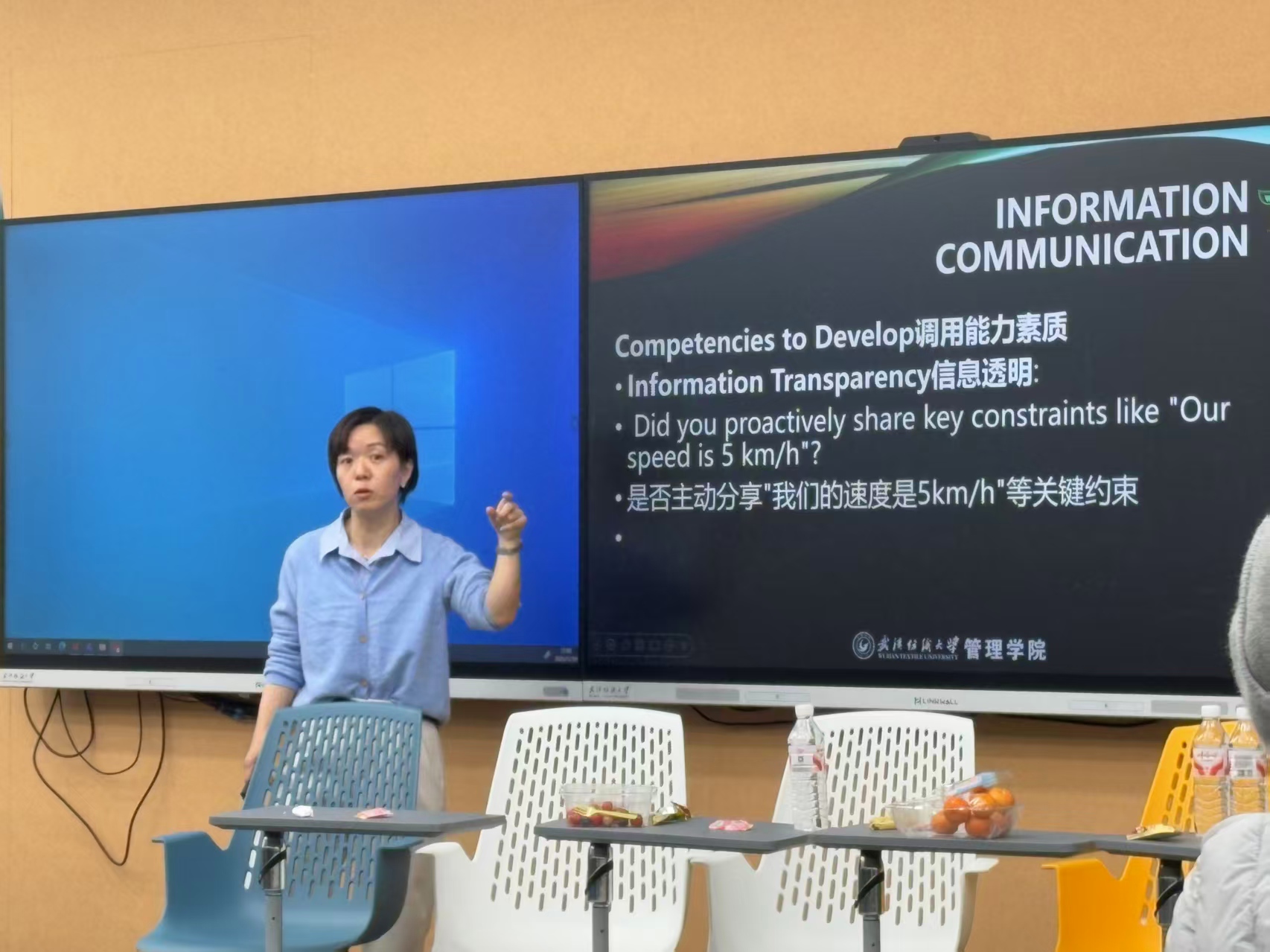
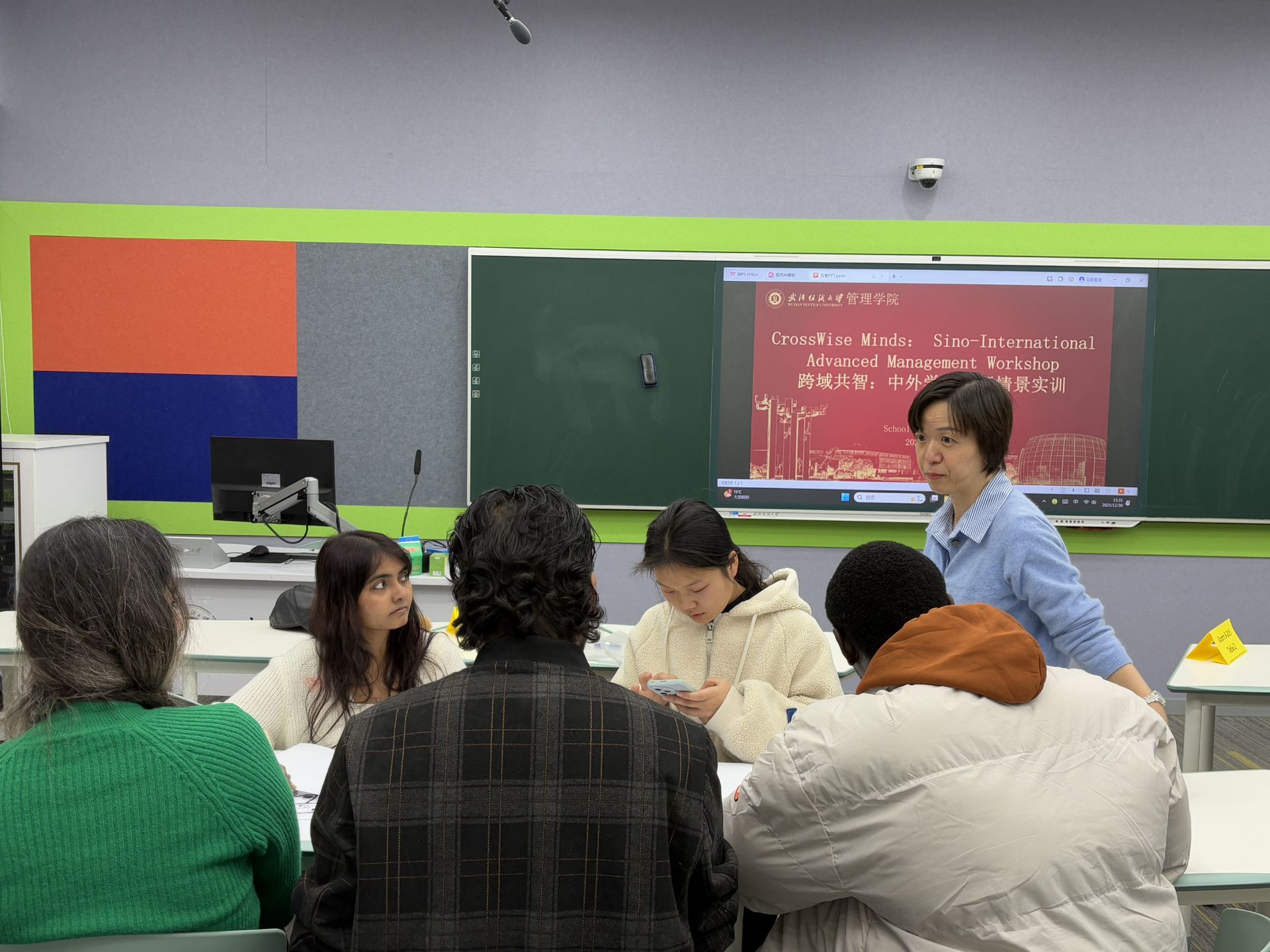
At the commencement of the activity, Associate Professor Yang Zheng from the School of Management, grounded in core management competencies, systematically elucidated the internal logic and critical capabilities of cross-cultural teamwork, using real-world global enterprise management scenarios as the blueprint. Professor Yang deconstructed the two core competencies of "effective expression" and "active listening" into actionable practice modules. The delivery seamlessly integrated rigorous management logic with consideration for international students' thinking patterns and communication rhythms, achieving fluid bilingual transitions between Chinese and English while intertwining theoretical instruction with scenario rehearsal. This rapidly immersed the atmosphere into a dual-context of "professional depth and cultural warmth."
Below the podium, Chinese and international students listened with rapt attention—some scribbling notes on scratch paper, others quietly discussing ideas with neighbors. Faces of different skin tones reflected the same seriousness and engagement. The originally diverse cultural backgrounds were tightly connected at this moment by a shared state of "focus." Throughout the lecture segment, there were no distracting whispers, only the soft friction of pen on paper, occasional hushed confirmations, and consistent concentration in everyone's gaze—minds speaking different languages resonated in sync along the trajectory of professionalism.
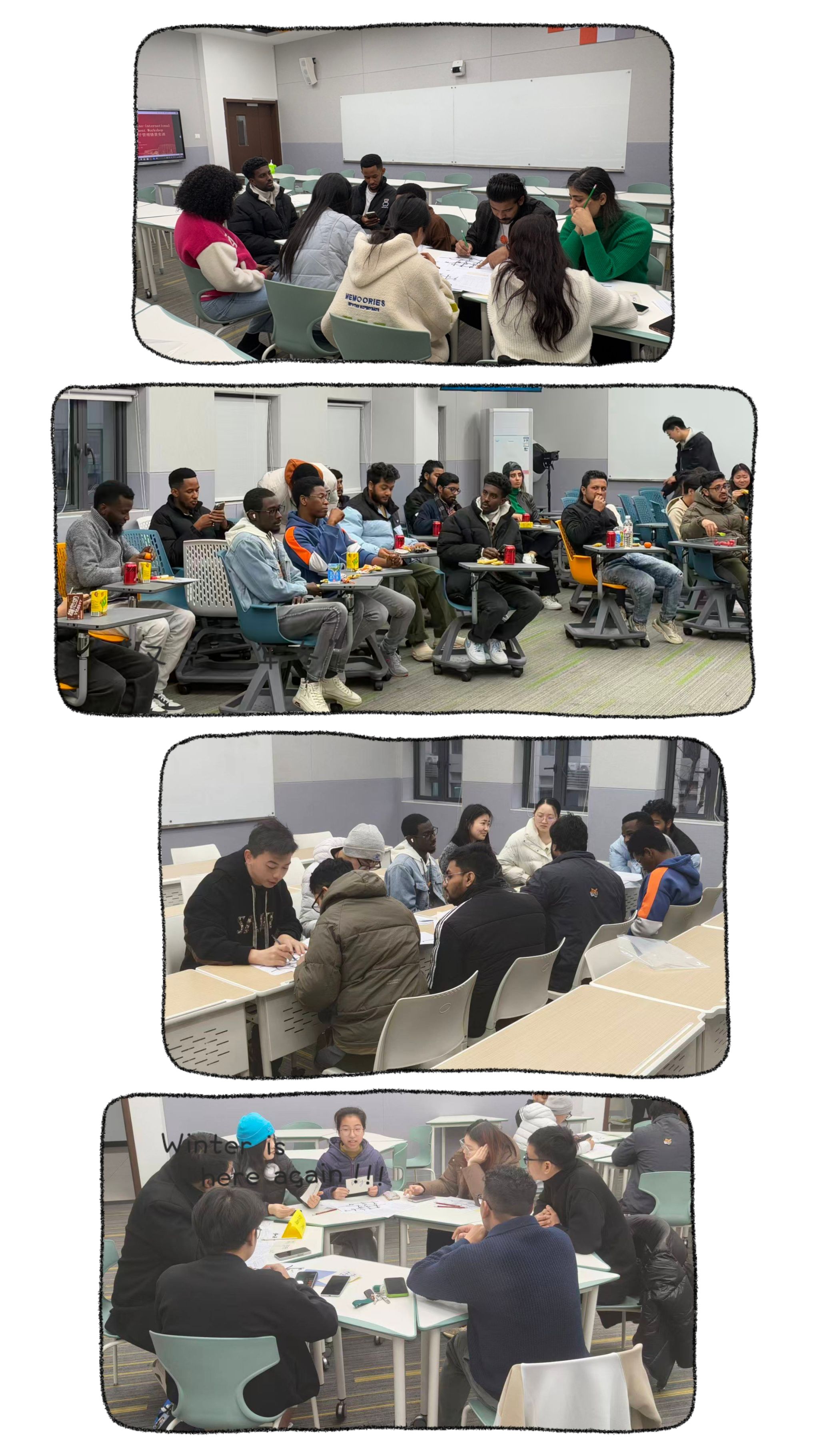
Following the theoretical empowerment, the activity transitioned to the practical exercise segment. The classroom space was creatively reconfigured into multiple circular collaboration islands. The carefully prepared refreshments and fruits on tables served not only as energy replenishment but also as cultural mediums that opened hearts. Chinese and international students were randomly grouped in a relaxed atmosphere to jointly tackle management training projects including "Information Relay" and "Cross-Cultural Team Decision-Making." When Chinese students used gestures to supplement task explanations and international students responded with humorous body language; when minds of different mother tongues collided to generate solutions in front of a whiteboard—language barriers were quietly dissolved by professional rapport, and cultural differences were transformed into innovative inspiration under shared objectives.
In the classroom, discussion and laughter interwove into a unique cross-cultural "harmony." Unfamiliar faces established profound friendships through intellectual collisions, and the professional scenario of management studies was elevated into a micro-field of practice for civilization mutual learning.
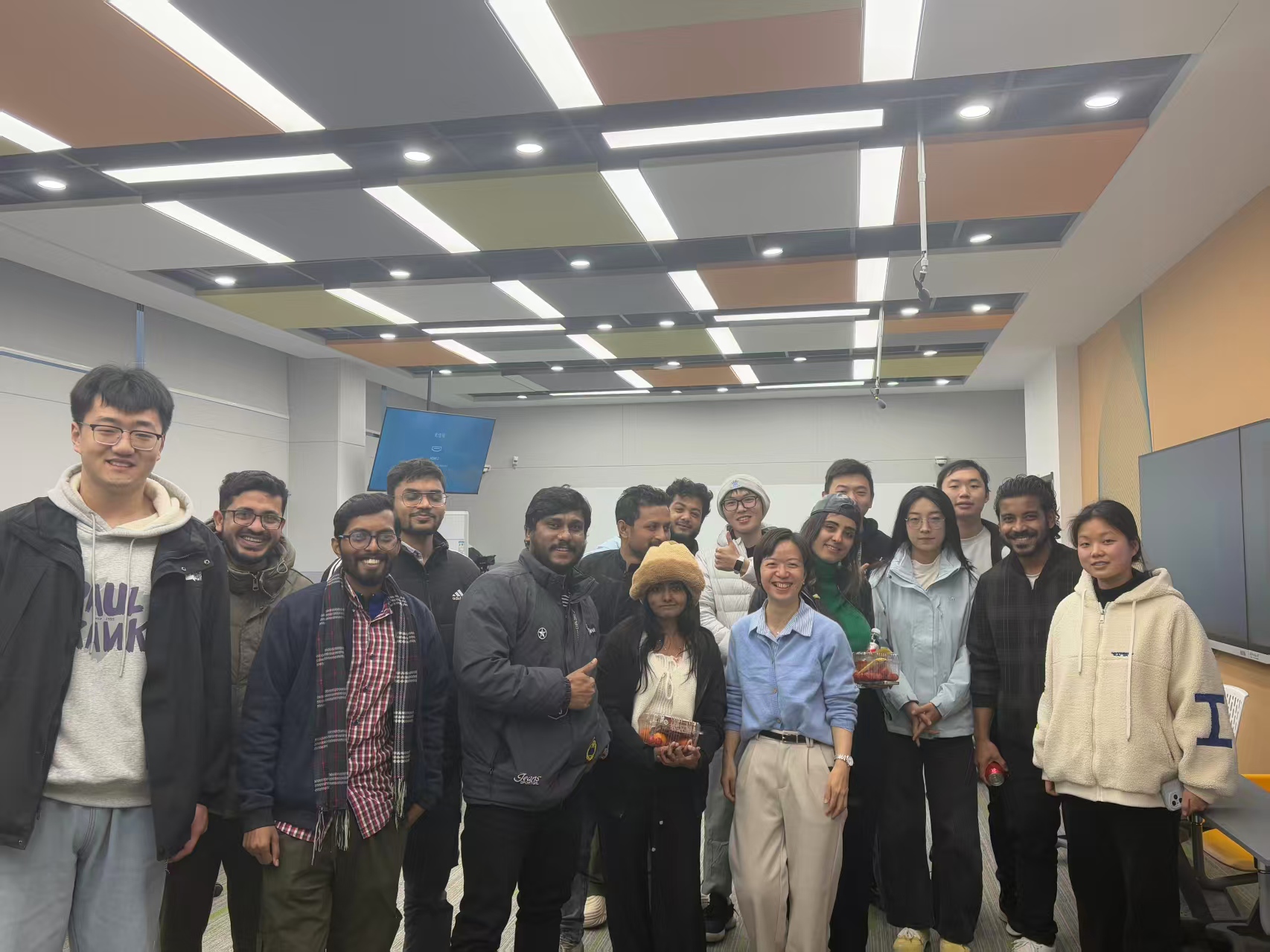
At the conclusion of the activity, all Chinese and international students gathered for a group photo with the instructors in the front row. This vivid real-scenario training session epitomizes the School's trinity-oriented educational philosophy of 'value shaping, knowledge imparting, and capability cultivation.' Against the backdrop of dual transformation through globalization and digital intelligence, the core competitiveness of management talent is demonstrated not only through professional competence but, more importantly, through cross-cultural understanding, global competency, and collaborative innovation. The School will continuously deepen this international practical teaching model to cultivate more outstanding management talent with Chinese perspectives and global vision for building a community with a shared future for mankind.
As a significant component of the University's "Internationalization-Oriented Education" brand series, this training session innovatively achieved three integrations: the deep integration of academic disciplines and cross-cultural competencies, the seamless connection between theoretical teaching and practical training, and the emotional convergence of mutual learning between Chinese and international students. The activity not only effectively enhanced students' cross-cultural communication and teamwork capabilities but also constructed a dialogue bridge for youthful minds from different civilizational backgrounds through the "common language" of management studies.Looking forward, the School of Management will take this activity as a new starting point to further integrate disciplinary resources, continuously launch a series of "Discipline + Culture + Technology" Sino-Foreign exchange programs, systematically incorporate cross-cultural competency cultivation into talent development programs, and strive to develop a demonstrative "WTU Paradigm" for international management education, thereby contributing management wisdom and talent strength to the University's "Double First-Class" initiative.
