To further promote in-depth cooperation between Wuhan Textile University and the Hubei Provincial Academy of Environmental Sciences in the fields of textiles and the "dual carbon" goals, a delegation of ten members visited the Academy for an exchange symposium on November 13. The delegation was invited by the Academy and led by Professor Wu Jinhong, Executive Dean of the School of Management. It included Professor Wang Bin, Vice Dean of the School of Economics, Professor Wang Jinfeng, Director of the National-Local Joint Engineering Laboratory, along with other academic program leaders and young PhDs from relevant schools. They were received by Professor Liu Wei, Vice President of the Academy, Professor Pan Fei, Vice President (seconded) of the Academy and Dean of the School of Resources and Environment at Wuhan Textile University, along with other relevant officials.
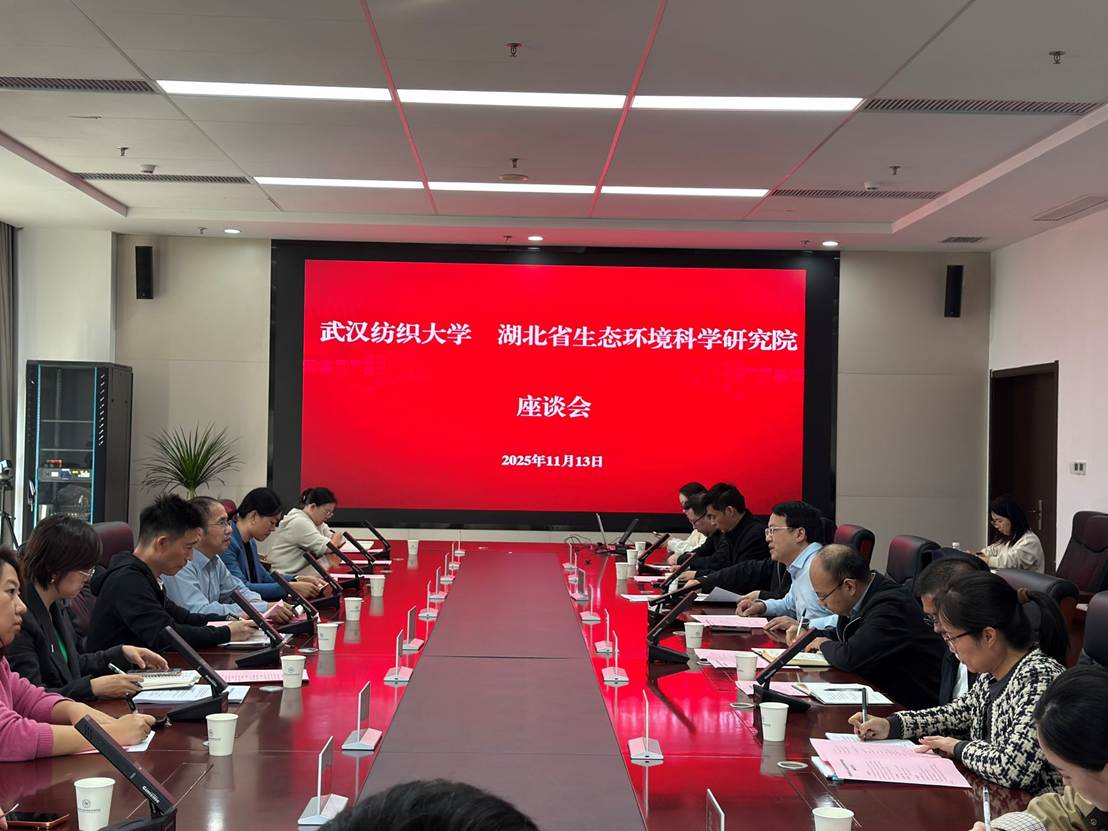
During the symposium, Vice President Liu Wei, Vice President Pan Fei, Professor Liao Qi, Director of the Low-Carbon and Environment Institute at the Academy, and Professor Wu Jinhong delivered presentations on topics including green finance, carbon sink, carbon assessment, inclusive carbon policies, and carbon labeling. Professor Wu Jinhong expressed sincere gratitude to the Academy for its warm reception and thoughtful arrangements. He emphasized that the cross-disciplinary and inter-institutional interaction provided an important platform for deepening practical collaboration and looked forward to enhancing mutual understanding through this opportunity.
During the thematic discussion session, participants engaged in in-depth exchanges on pathways for advancing cooperation in the "dual carbon" domain. Discussions focused on practical applications and promotion strategies within textile enterprises and industrial parks. Both sides recognized broad potential for collaboration in areas such as establishing green supply chains, designing energy-saving and emission-reduction technology roadmaps, facilitating industrial chain coordination, conducting low-carbon policy research, and formulating sector-specific plans. By integrating the university's research strengths, the technical capabilities of national-level platforms, and the professional expertise of the Academy, and aligning closely with relevant national strategies outlined in the 15th Five-Year Plan, the parties aim to advance policy research, actively engage in international exchanges, and promote the implementation of green, low-carbon solutions in textile enterprises and industrial parks. This effort will provide solid intellectual support and practical pathways for the sustainable development of the industry.
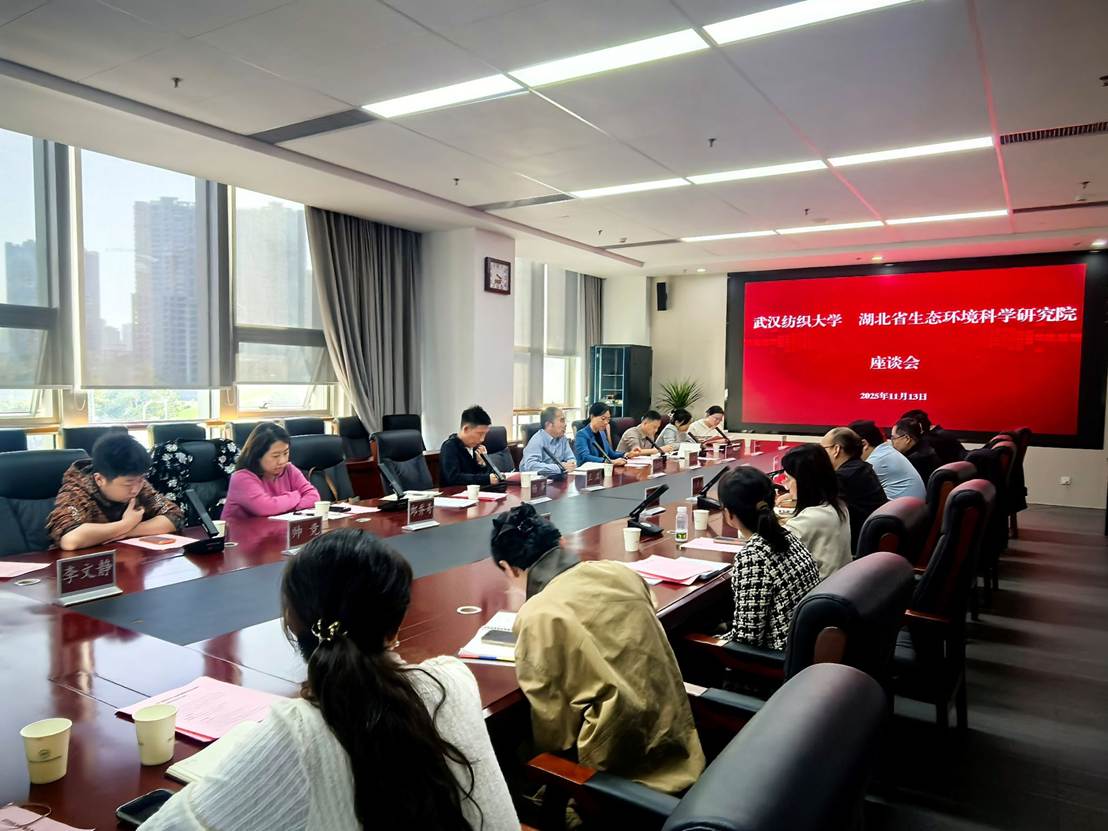
The symposium served not only as a high-quality academic exchange but also successfully established a collaborative bridge between the university, research platforms, and specialized research institutions. Through the discussions, consensus was strengthened and resources were integrated, laying a solid foundation for serving the local economy and industrial development. It also injected new momentum into the university's "Double First-Class" initiative, further enhancing the disciplinary influence and societal service capacity of the university.
